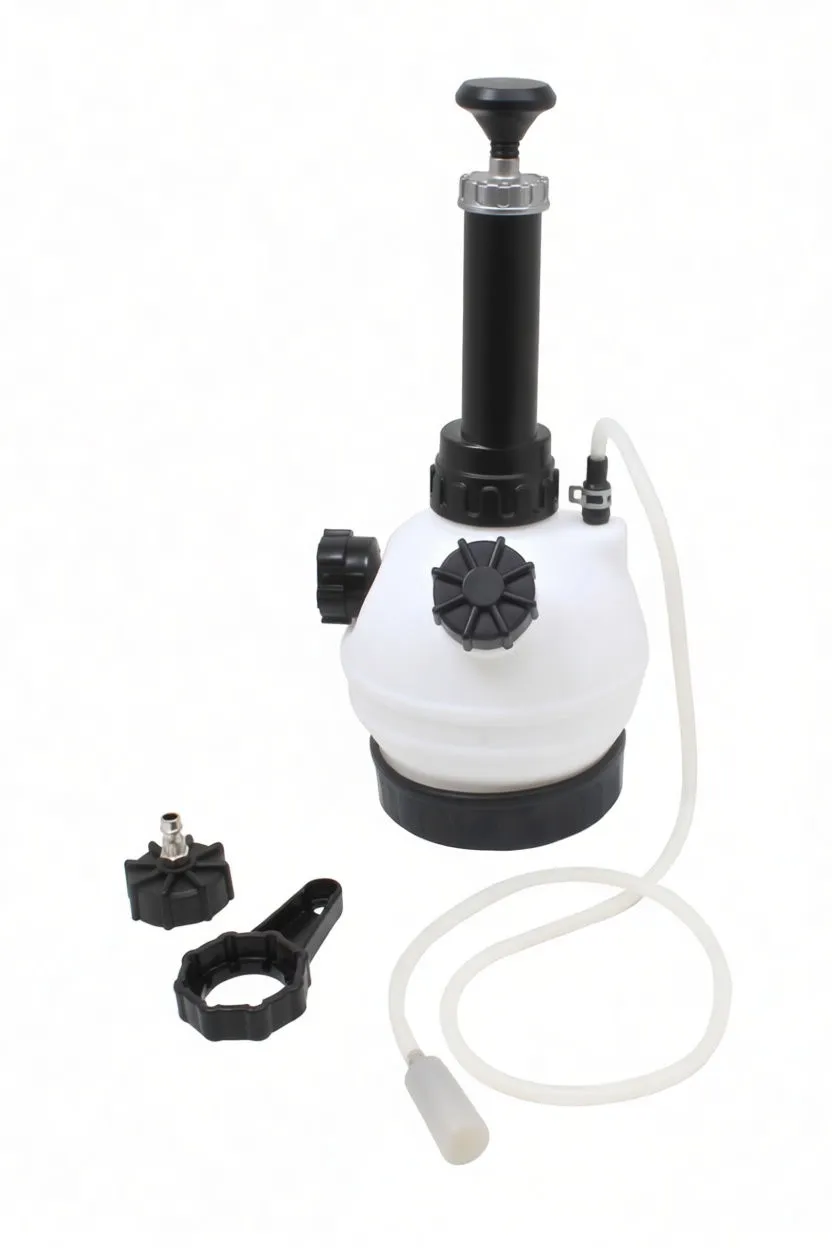
2L Manual Pressure Brake Fluid Bleeder with Integrated Gauge and Quick-Connect Coupling
One-person brake bleeding system with 2L reservoir, manual pump, and pressure gauge—no external power required.
Request QuoteDescription
2L Manual Pressure Brake Fluid Bleeder
Overview
This is a purpose-built, self-contained brake bleeding system designed for technicians who need reliable, power-independent fluid circulation without workshop infrastructure. The 2-liter capacity allows complete system flushing in a single fill cycle, eliminating the frustration of mid-job refills. Whether you're working on European vehicles or running a multi-bay shop, pairing this manual bleeder with a 12V electric alternative or pneumatic extraction kit gives you the flexibility to match tool selection to job requirements.
Key Features
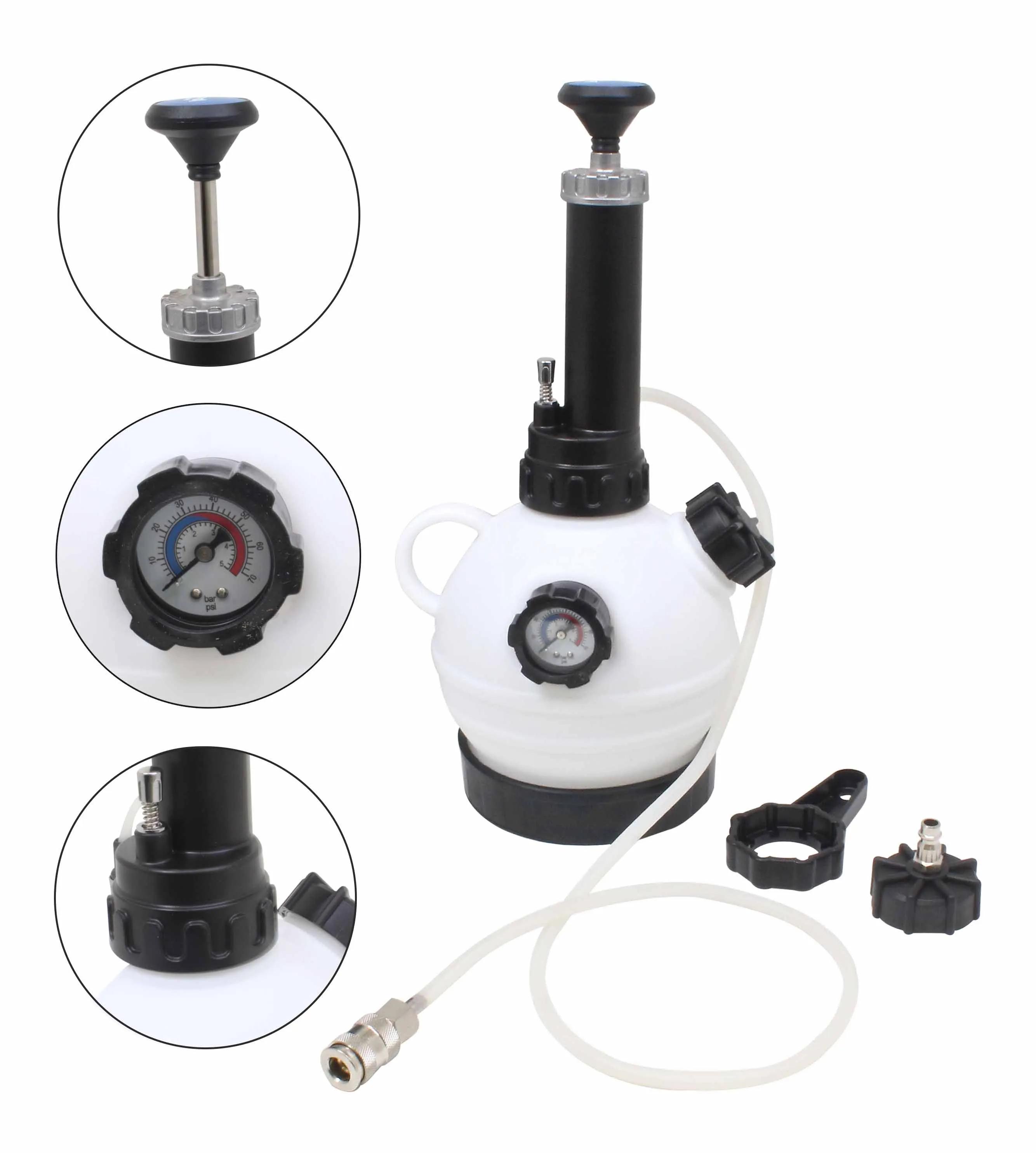
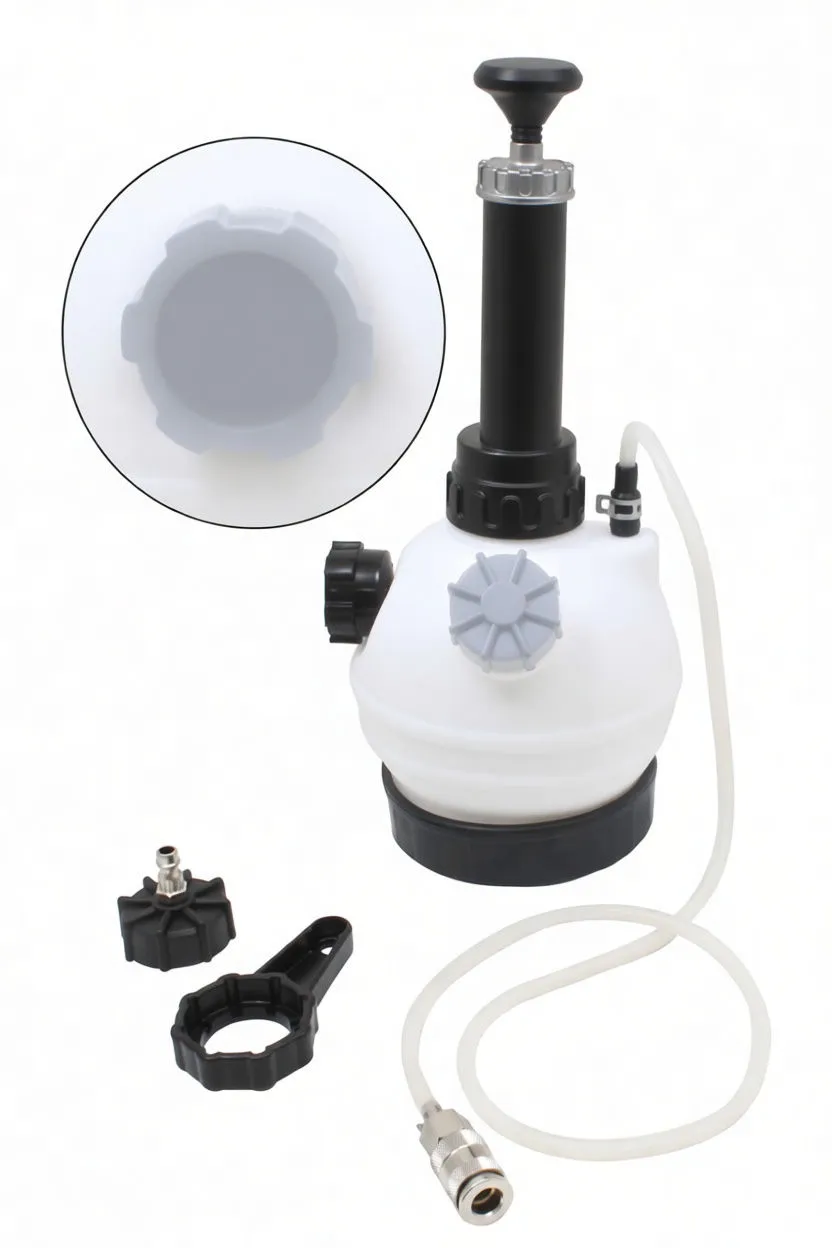
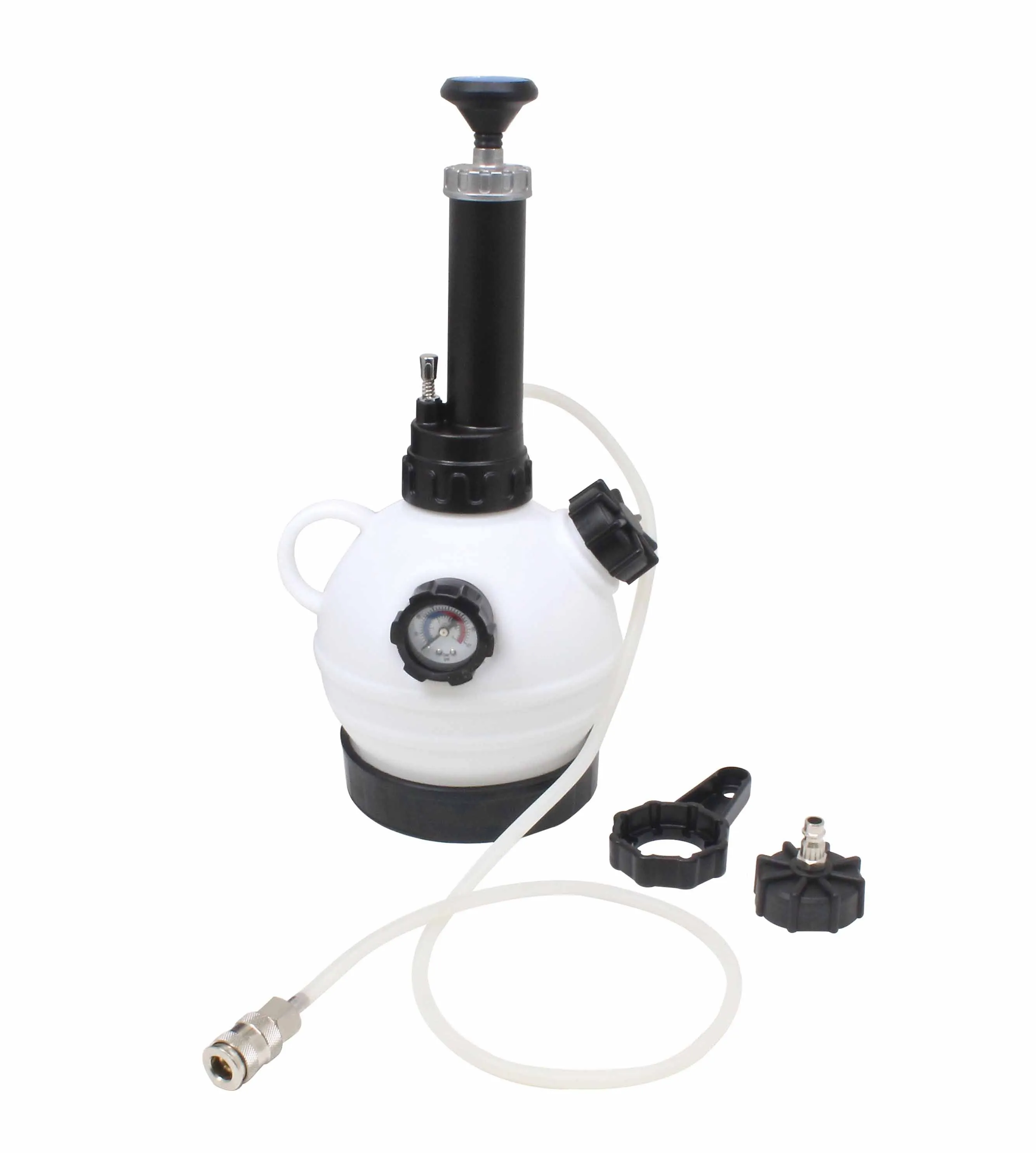
- Manual Pump Operation: No electricity or compressed air required—works anywhere on the job
- 2-Liter Translucent Reservoir: High-visibility fluid level; large capacity minimizes refill cycles during full system flushes
- Integrated Pressure Gauge: Front-mounted analog gauge with color-coded zones (blue/red) for pressure monitoring and system diagnostics
- 42mm Universal Connection: Standard European port fitting compatible with most vehicle brake systems
- Metal Quick-Connect Coupling: Secure, leak-resistant outlet connection with flexible clear hose included
- Molded Side Handle: Ergonomic grip for stable single-handed operation
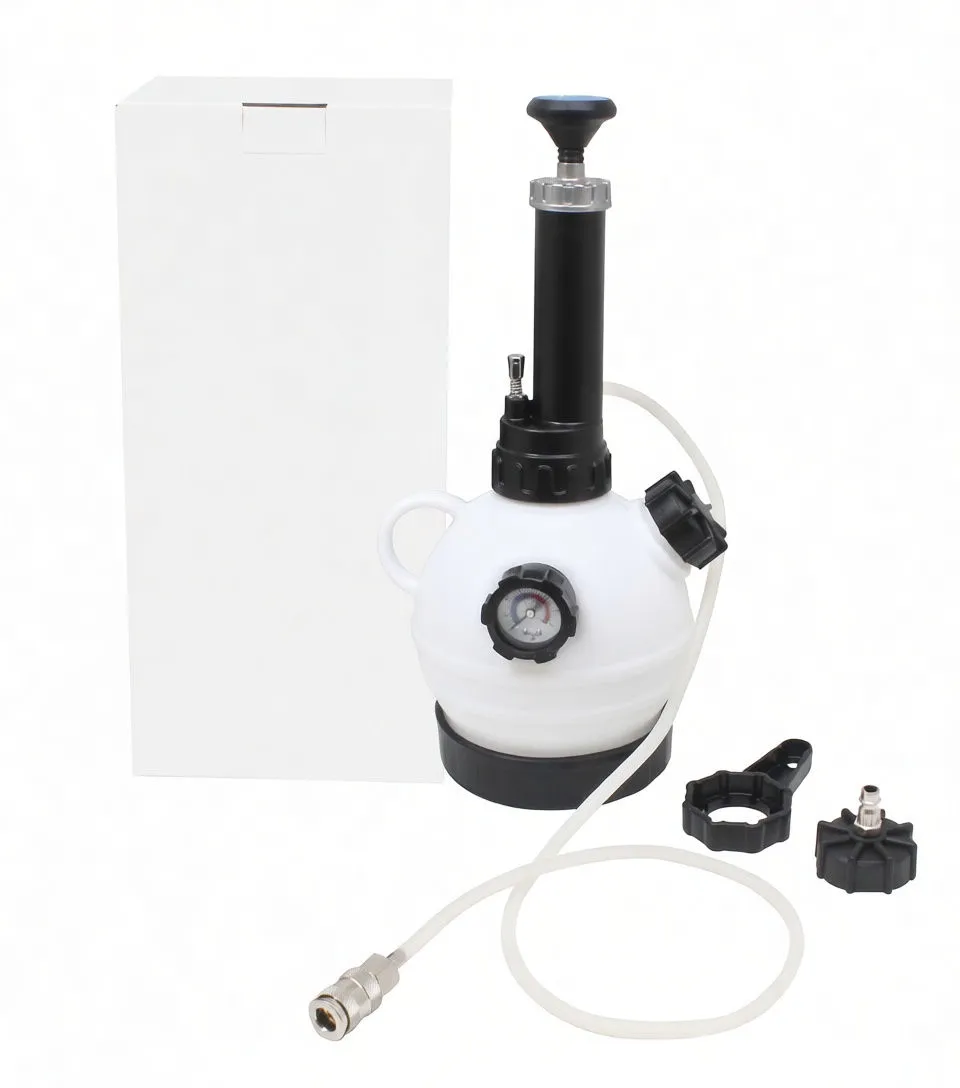
- Spare Components Included: Screw caps, locking ring, and metal valve fitting for flexibility across different vehicle architectures
Business Advantages for Resellers
- No Infrastructure Dependency: Market as the ideal solution for mobile technicians, training centers, or shops without dedicated pneumatic/electrical line
- Recurring Sales Opportunity: Pair with specialty brake wrench sets to create brake service bundles
- Professional Presentation: Compact footprint and clean design appeal to independent shops and fleet maintenance operations
- High Perceived Value: Mechanical reliability and visible gauge operation instill customer confidence
- Margin-Friendly: Simple mechanics translate to competitive wholesale pricing with healthy distributor markup
Technical Specifications
| Specification | Value |
|---|---|
| Reservoir Capacity | 2 Liters |
| Reservoir Material | Translucent Polymer |
| Pump Type | Manual (Hand-Operated) |
| Connection Port | 42mm (European Standard) |
| Outlet Coupling | Metal Quick-Connect |
| Pressure Gauge | Analog, Color-Coded Scale |
| Hose Included | Clear Flexible Tubing |
| Power Requirement | None (Manual Operation) |
| Dimensions | Compact, Hand-Portable |
| Additional Accessories | Spare caps, locking ring, metal valve fitting |
Why Distributors Choose This Product
This bleeder solves a specific, repeatable problem: technicians need a standalone, non-electric solution for brake maintenance that doesn't compromise on visibility or control. The manual pump design means zero maintenance on electrical components and no dependence on air compressor availability. Shops can deploy multiple units across bays without coordinating power lines, and the integrated gauge gives technicians real-time system feedback—a professional touch that justifies the tool's presence in quality-conscious shops.
The 2-liter capacity is the critical advantage; most smaller bleeders require 2-3 refills on a complete flush, introducing air pockets and extending labor time. This product eliminates that cycle waste.
Stock this for independent technicians, vocational training programs, mobile service units, and shops transitioning from older pneumatic systems to more flexible, modular approaches.