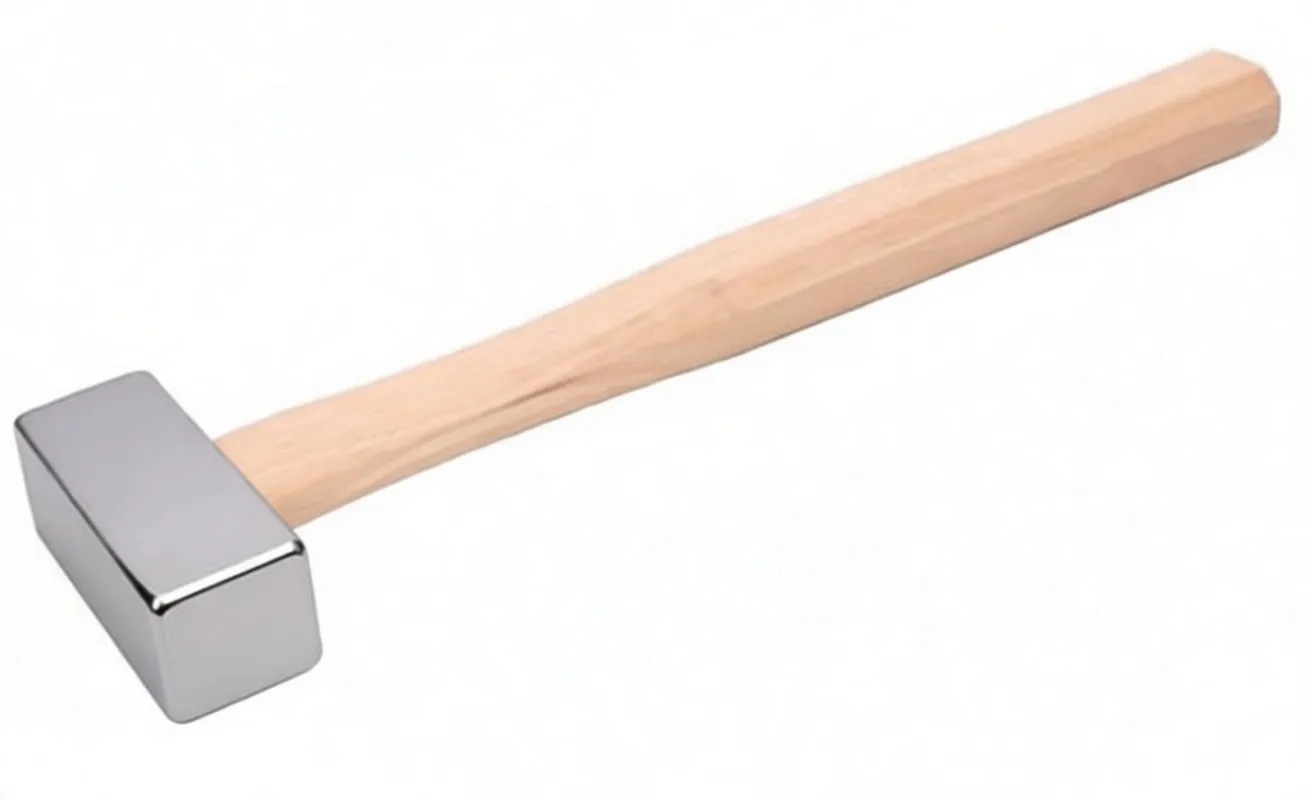
Tinsmith's Hammer with Checkered Face and Wood Handle
Lightweight tinsmith's hammer with dual-face head and textured striking surface for precision sheet metal work.
Request QuoteDescription
Tinsmith's Hammer with Checkered Face and Wood Handle
Overview
This is a purpose-built tinsmith's hammer designed for precise sheet metal shaping and planishing work. The dual-face head combines a smooth flat steel striking surface with a distinctive checkered texture face, providing versatility for different metalworking tasks. The lightweight construction and carefully finished wood handle reduce operator fatigue during extended use, while the textured face prevents slipping on the workpiece—a critical advantage when working with delicate sheet metal.
If you're stocking tinsmith tools, consider pairing this with sheet metal shaping spoons and complementary dual-faced hammers to offer customers a complete hand-tool solution.
Key Features
- Dual-Face Head: Smooth flat face for general striking; checkered/textured face for controlled, non-slip impact on sheet metal
- Checkered Striking Surface: Raised grid texture reduces tool slipping and improves strike accuracy on sheet material
- Lightweight Design: Reduced weight compared to standard hammers minimizes fatigue during repetitive forming and planishing operations
- Wood Handle: Straight, tapered wood handle with careful workmanship; octagonal cross-section provides secure grip control
- Precision Metalworking: Engineered specifically for tinsmithing, panel beating, and sheet metal fabrication tasks
Why This Hammer Works for Your Customer Base
Sheet metal workers and panel beaters rely on strike control and surface grip to prevent marring their work. The checkered face on this hammer is the defining feature—it grips the workpiece without the bounce-back or slipping that occurs with smooth hammer faces on finished metal surfaces.
The dual-face design eliminates the need for customers to carry multiple hammers for different stages of the job (rough forming vs. fine planishing). This translates to faster workflows and fewer tool changeovers on the bench or in the field.
The weight reduction, as noted in the original design brief, is not a gimmick—it's a direct ergonomic benefit. Tinsmithing involves repetitive, controlled strikes over hours. A lighter hammer reduces wrist strain and allows for more precise, controlled impact.
Technical Specifications
| Feature | Specification |
|---|---|
| Hammer Type | Tinsmith's (Tinner's) Hammer |
| Head Configuration | Dual-face steel head |
| Primary Striking Face | Smooth flat steel surface |
| Secondary Striking Face | Checkered/grid textured (painted or coated pad) |
| Handle Material | Wood (unfinished or lightly finished) |
| Handle Cross-Section | Octagonal (tapered toward head) |
| Head Attachment | Single eye socket |
| Intended Use | Sheet metal shaping, planishing, forming, panel beating |
| Key Benefit | Reduced weight + texture control for precision work |
Reseller Advantages
- Margin-Friendly Category: Hand tools for sheet metal work have consistent demand and strong margins
- Durability: No batteries, no breakable electronics—these hammers last decades with basic care
- Bundling Opportunity: Pair with spoons, mallets, or panel-beating tools to create complete tinsmith kits
- Professional Positioning: Tinsmithing tools appeal to restoration specialists, custom panel shops, and metal artisans—higher-value customers
- Stock Longevity: Once purchased, hand tools don't become obsolete or require seasonal restocking
Bottom Line
This tinsmith's hammer delivers what the craft demands: controlled striking power, surface grip through the checkered face, and lightweight handling for precision work. It's a straightforward, reliable tool that professionals recognize and trust. Stock it with confidence—it will move.